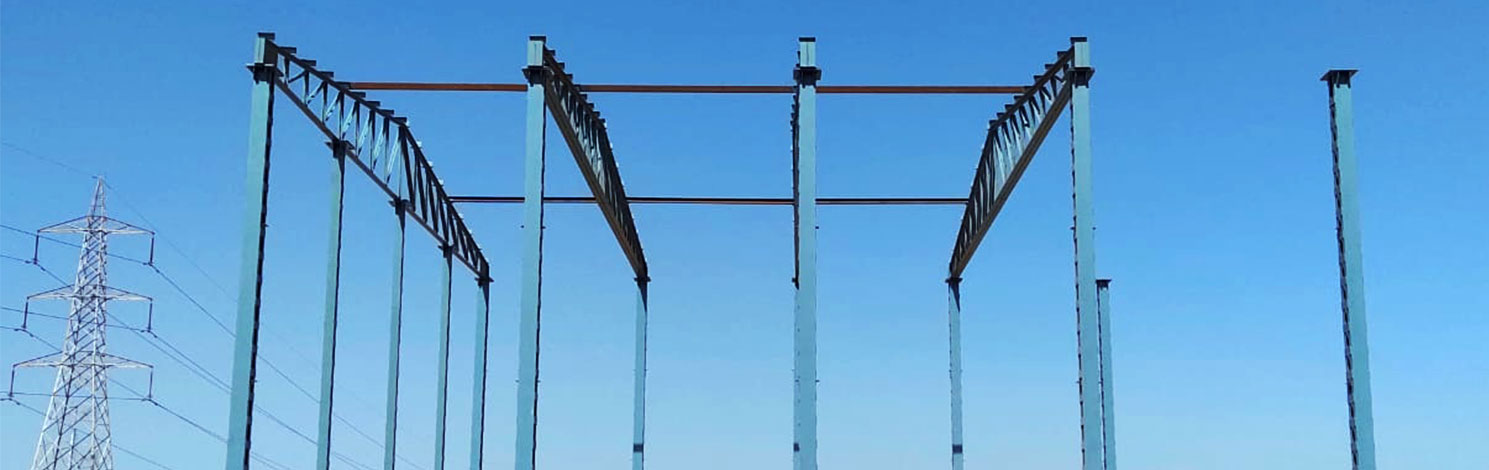
Fabrication is the process of manufacturing individual components or sections of a structure from raw materials, typically in a workshop or factory. Erection is the subsequent process of assembling and installing those fabricated components at the construction site to form the final structure.
Fabrication
This is a controlled manufacturing process that transforms raw materials, most often metal, into a finished product or a part of a larger assembly.
Key activities:
- Cutting: Using methods like laser, plasma, or waterjet cutting to slice materials to the precise sizes and shapes required by engineering drawings.
- Bending: Shaping materials with machines like press brakes to achieve the necessary angles and forms.
- Welding: Permanently joining metal parts together using heat or pressure.
- Machining: Using precision tools to shape and finish metal parts to exact specifications.
- Assembly: Putting together the cut, bent, and welded pieces into larger, sub-assembled sections.
- Finishing: Applying coatings, such as primers and paint, to protect the components from corrosion.
- Quality control: Inspecting the finished components to ensure they meet technical specifications before being shipped to the site.
Erection
This is the on-site assembly phase where fabricated sections are brought together to create the final structure.
Key activities:
- Logistics: Transporting the fabricated components from the workshop to the construction site.
- Preparation: Verifying that foundations and other prepared areas are correct and ready for the assembly.
- Assembly: Lifting and positioning heavy, fabricated parts with equipment like cranes, hoists, and scaffolding.
- Connection: Securing the components together, typically through bolting or welding.
- Alignment: Adjusting the assembled frame to ensure it is within specified tolerances.
- Safety: The process requires extensive safety measures due to the risks of working at heights and with heavy materials.
 +91 91733 66677 |
  jbfabricaters@gmail.com | Webmail